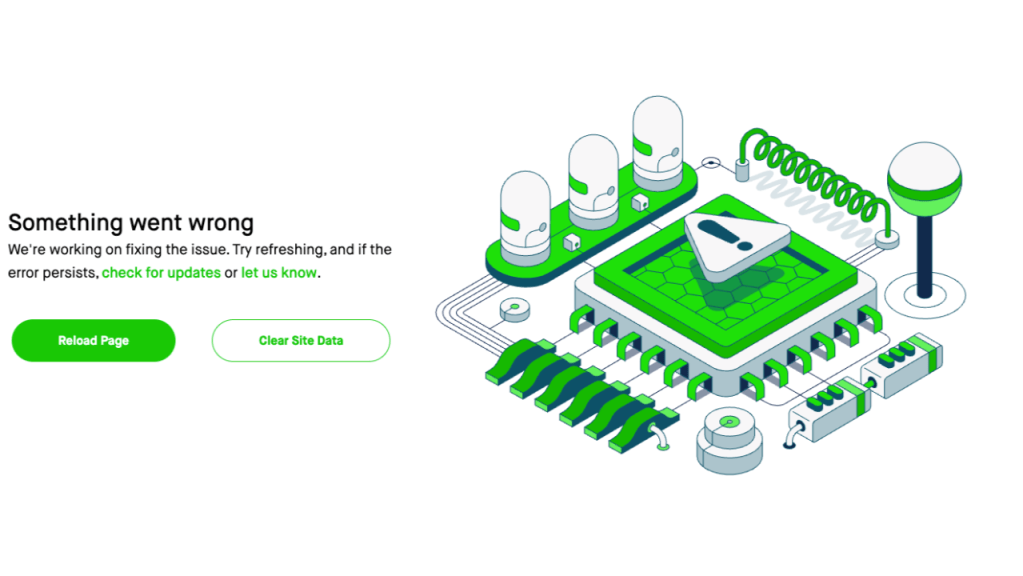
At exactly 6:30 AM PST today, Robinhood — the darling of retail trading — went dark. App, website, everything. I thought it was my Wi-Fi. Restarted my Mac, iPad, phone. Checked X. Turns out, thousands of traders were doing the same. According to Downdetector, over 11,000 users reported outages right at market open.
Here’s the weird coincidence: AMD stock exploded today — surging ~27% in pre-market trading after announcing a mega AI chip deal with OpenAI. Business Insider+3The Economic Times+3Reuters+3 That’s not a minor blip. When a chipmaker with broad reach spikes like that, capital flows. And when a trading platform goes dark exactly as money is moving — you start asking questions.
When a B2C app becomes the bridge between people and their money, reliability isn’t a feature — it’s oxygen. At 6:30 AM, every second matters. A few seconds of delay can flip profits to losses. This morning, that trust took a hit for me.
Here’s the thing — outages happen. Everyone knows that. But what defines a great product isn’t just uptime, it’s how fast you own the downtime.
When your entire customer base realizes something’s wrong before you do, that’s a product failure — not of code, but of communication. I had to manually check the Robinhood website, then dig through X posts to confirm the outage. There was no banner, no alert, no push notification saying “We’re on it.”
That silence hurts more than the outage.
In fintech, trust is your only moat. Transparency, proactive updates, and visible accountability are the difference between “users” and “believers.” If Robinhood can move billions in trades per second, it can surely move one status banner before Twitter breaks the news.
Now, here’s the uncomfortable question no one likes to ask: Was this just a technical failure — or a deliberate pause? Because when a platform goes down right as markets open and some tickers in SURGE mode, the suspicion is unavoidable — did institutional traders still have access while retail was locked out?
History doesn’t help their case. Robinhood’s been fined before: $57M by FINRA for outages and misleading statements, $13M in restitution to affected users, and a $9.9M settlement after 2020’s trading blackout. Yet here we are again, in 2025, still hitting refresh.
If platforms can’t guarantee transparency, regulators must. Trading systems need real audits — to prove neutrality, fairness, and that every user gets equal access to the market, no matter their balance size.
“When your product is money, trust isn’t earned once. It’s earned every morning at 6:30 AM.”
Disclaimer: I use multiple trading platforms for this exact reason — to avoid single-platform dependency when things go sideways.I genuinely love Robinhood’s mobile app — it’s clean, fast, and beautifully designed. But when money’s on the line, I’ll take redundancy over elegance any day. Convenience is great… until your portfolio’s frozen mid-trade.




 Magesh Kumar's Blog
Leave a comment